
How to earn money every month from solar panels is the biggest question in the mind of Indian homeowners today. A wrong solar decision can cost you money for the next 25 years, while the right decision can turn your roof into a monthly income source. If you are searching for answers like what is the cost of a 3kW solar panel, how much is 1 solar panel price, or which is the No.1 solar energy company in India, this article is written exactly for you.
After extensive research, I had solar panels installed on my roof, and I’m sharing this article with you only after consulting with experts. My goal is to help you also earn money from a rooftop solar system by installing the right solar panels.
Read More: Best Gimbal for Beginners 2026 – Which Gimbal Is Best for Vlogging & AI Tracking?
My Personal Solar Journey: Why I Decided to Install Solar Panels
When the Government of India strongly promoted solar panel installation, I also started thinking seriously about it. The biggest question in my mind was:
“What are solar panels and how do they save electricity?”
Later, when I started researching deeply, I got confused — because I wanted two things:
- To save my expensive electricity bills
- To earn money every month from solar panels
Around 2024, the Government of India launched a massive solar promotion campaign. Under this scheme at that time:
- Central Government provided 40% subsidy
- State Government provided 30% subsidy
That means up to 70% subsidy was available earlier.
⚠️ Important Update (2025 onwards): After 2025, state governments have withdrawn their solar subsidy in many states, including Uttarakhand. Currently, only the Central Government subsidy of around 30% is available under MNRE-approved rooftop solar schemes.
Because of this change, the final cost borne by consumers has increased, and it has become even more important to calculate ROI correctly before installation.
Being from Uttarakhand, I also installed a high-quality solar panel system at my home. Based on my real experience, this article will explain:
- How solar panels are installed
- How solar panels help save monthly electricity bills
- How you can earn money every month from solar panels
- Real problems and benefits you should know before installation
What Is the Cost of a 3kW Solar Panel System in India?
The cost of a 3kW solar panel system in India depends on the type of system you choose.
Average 3kW Solar Panel Price in India (2026):
Below prices are market prices before subsidy:
- 3kW On-Grid Solar Panel Cost: ₹2,10,000 – ₹2,40,000
- 3kW Off-Grid Solar Panel Cost: ₹2,70,000 – ₹3,10,000
- 3kW Hybrid Solar Panel Cost: ₹3,10,000 – ₹3,60,000
After applying the current ~30% central subsidy, the effective cost reduces accordingly.
A 3kW solar panel system can generate 12–15 units of electricity per day, which is ideal for a medium-size Indian household.
Trusted Source: Ministry of New and Renewable Energy (MNRE), Government of India
Types of Solar Rooftop Systems – Comparison Table
| Solar System Type | Grid Connection | Battery Required | Best For | Can Earn via Net Metering |
|---|---|---|---|---|
| On-Grid Solar | Yes | No | Urban homes with DISCOM | ✅ Yes |
| Off-Grid Solar | No | Yes | Power cut areas | ❌ No |
| Hybrid Solar | Yes | Optional | Premium users | ✅ Yes |
How Much Is 1 Solar Panel Price in India?
Many users ask: How much is 1 solar panel price?
The price of one solar panel depends on watt capacity and technology.
1 Solar Panel Price List (India):
- 330W Solar Panel Price: ₹7,000 – ₹9,000
- 440W Solar Panel Price: ₹9,000 – ₹12,000
- 550W Solar Panel Price: ₹13,000 – ₹16,000
For a 3kW solar panel system, you usually need 6 to 9 solar panels.
Solar Panel ROI (Return on Investment) Table
| Year | Electricity Saving | Cumulative Saving |
|---|---|---|
| 1st Year | ₹35,000 – ₹45,000 | ₹40,000 |
| 3rd Year | ₹1,20,000+ | ₹1,20,000 |
| 5th Year | ₹2,00,000+ | System Cost Recovered |
| 10th Year | ₹4,50,000+ | Pure Profit |
| 25 Years | ₹12–15 Lakh | Lifetime Earnings |
What Is a Solar Panel and How Does It Work?
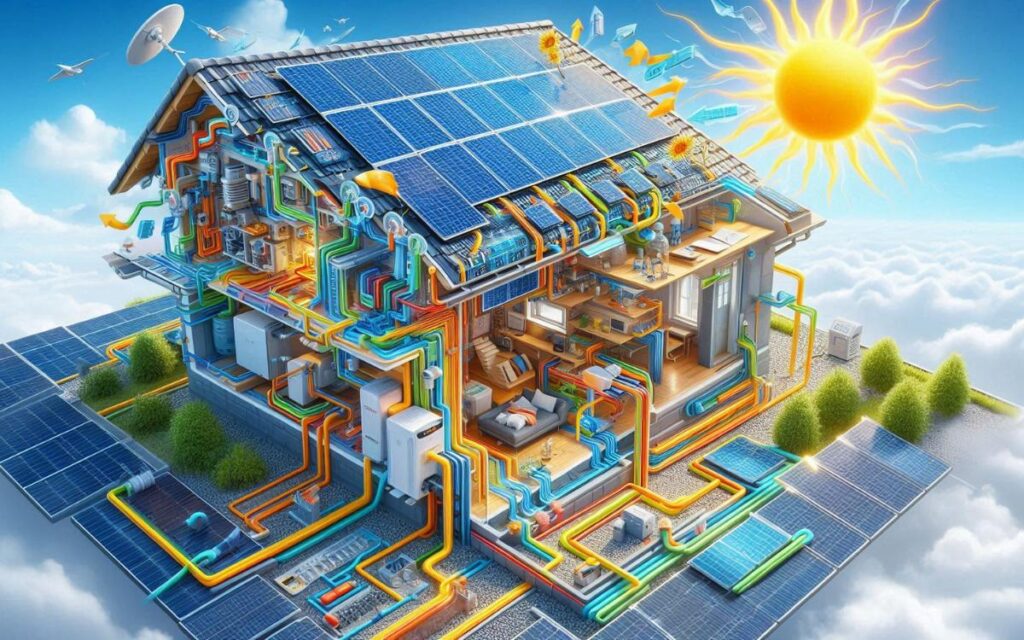
A solar panel is a device that converts sunlight into electricity using photovoltaic (PV) technology.
How Does a Solar Panel Work?
- Sunlight falls on the solar panel
- Solar cells absorb solar energy
- DC electricity is generated
- Inverter converts DC to AC
- AC electricity runs home appliances
This process is completely pollution-free and reduces electricity bills significantly.
What Are Solar Panels and How Do They Save Electricity?
Solar panels save electricity by:
- Producing free electricity from sunlight
- Reducing dependency on grid power
- Cutting electricity bills by up to 90%
- Supporting net-metering benefits
This is why solar panels are becoming popular in India and hill states like Uttarakhand.
Before Buying a Solar Panel, Be Sure to Check These Things (Main Buying Checklist)
Before installing a solar panel system, always check the following points:
- Roof area and shadow-free space
- Daily electricity consumption
- Type of solar panel (Mono or Poly)
- Inverter quality
- Panel warranty (minimum 25 years)
- Government subsidy availability
- Net-metering approval
These checks help you avoid losses and wrong installation.
Read More: Best Gimbal for Beginners 2026 – Which Gimbal Is Best for Vlogging & AI Tracking?
Top 10 Things to Check Before Choosing a Solar Panel Company
Before selecting a solar panel company, check:
- MNRE approval
- Years of experience
- Installation quality
- After-sales service
- Panel efficiency
- Inverter brand
- Warranty coverage
- Customer reviews
- Transparent pricing
- Maintenance support
Top 10 Things to Check Before Choosing a Solar Panel Company in Uttarakhand
If you live in Uttarakhand, also check:
- Experience in hilly areas
- Wind and snow-load mounting structure
- UPCL net-metering process knowledge
- Local service availability
- Cold-weather performance experience
Local expertise is very important in hill regions.
Who Is No.1 in Solar Energy?
Globally, China is No.1 in solar energy production.
In India, the leading solar energy companies are:
- Tata Power Solar
- Adani Solar
- ReNew Power
Among rooftop solar providers, Tata Power Solar is often considered No.1 due to trust and scale.
Top 10 Best Solar Panel Companies in India (2026)
- Tata Power Solar
- Adani Solar
- Waaree Energies
- Vikram Solar
- RenewSys
- Loom Solar
- Goldi Solar
- Jakson Solar
- Azure Power
- ReNew Power
All these companies are MNRE-approved and trusted across India.
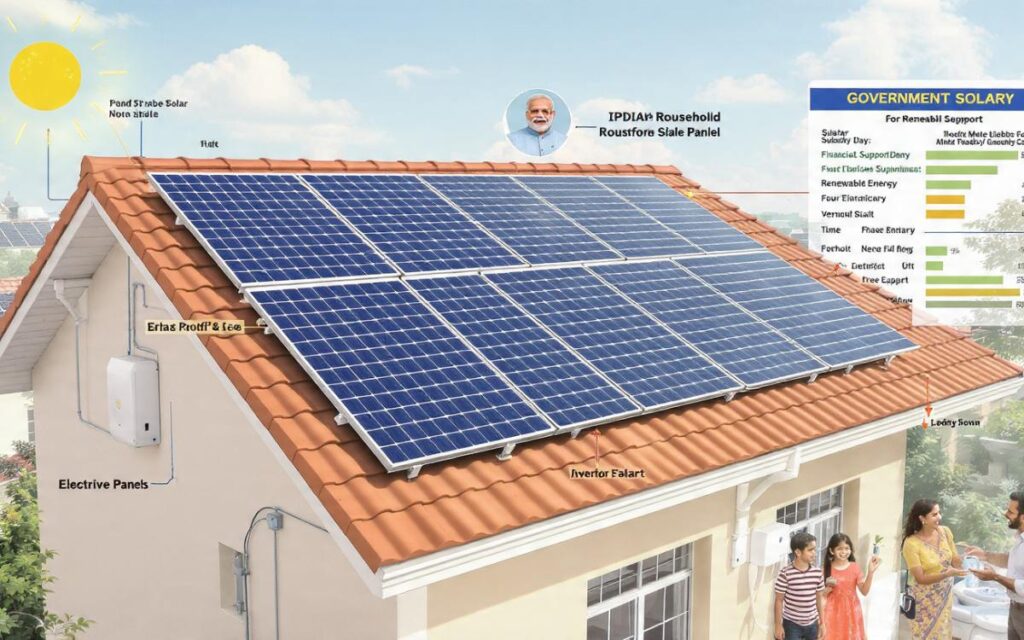
PM Surya Ghar: Muft Bijli Yojana – Latest Subsidy Details (Updated & Accurate)
To make sure readers get correct and up‑to‑date information, it is important to understand the PM Surya Ghar: Muft Bijli Yojana, which is currently the main rooftop solar subsidy scheme of the Government of India.
Under this scheme, the Government of India provides financial assistance of up to ₹78,000 for installing solar panels on residential rooftops. The subsidy amount is linked directly to the capacity (kW) of the solar system installed.
Subsidy Structure as per Solar Capacity
- 1 kW to 2 kW rooftop solar system: Subsidy starts from ₹30,000 per kW and can go up to ₹60,000.
- 2 kW to 3 kW rooftop solar system: Total subsidy ranges between ₹60,000 and ₹78,000.
- Above 3 kW system: The maximum subsidy is capped at ₹78,000, even if capacity is higher.
In some special-category states, an additional incentive of around 10% may be applicable as per local government policies.
Key Benefits of PM Surya Ghar Yojana
- Eligibility is limited to homeowners with an active electricity connection.
- The application process is 100% online through the official national rooftop solar portal or via the local DISCOM.
- Households can receive the benefit of up to 300 units of free electricity every month, depending on system size and consumption.
- For group housing societies, solar installations up to 500 kW are eligible for support, calculated at ₹18,000 per kW.
Documents Required for PM Surya Ghar Solar Subsidy
To avoid delays, applicants should keep the following documents ready:
- Latest electricity bill
- Aadhaar card
- Bank passbook or cancelled cheque
- Proof of house ownership (property registry or municipal tax receipt)
Step-by-Step Process to Apply for PM Surya Ghar Solar Subsidy
- Register on the official PM Surya Ghar rooftop solar portal.
- Select your state, electricity distribution company (DISCOM), and enter your consumer account number.
- Wait for technical feasibility approval from DISCOM.
- Get the solar system installed through an MNRE‑approved vendor.
- Apply for net metering after installation.
- After inspection, submit your bank account details on the portal.
- The subsidy amount is usually credited to the bank account within 30 days after final approval.
Solar Panel Cost, Income & Subsidy – Quick Comparison Table (2026)
| Solar System Capacity | Average Cost (Before Subsidy) | Govt Subsidy (PM Surya Ghar) | Final Cost (Approx) | Monthly Units Generated | Monthly Saving / Income |
|---|---|---|---|---|---|
| 1 kW Solar Panel | ₹70,000 – ₹85,000 | ₹30,000 | ₹40,000 – ₹55,000 | 120 – 150 units | ₹900 – ₹1,200 |
| 2 kW Solar Panel | ₹1,40,000 – ₹1,60,000 | ₹60,000 | ₹80,000 – ₹1,00,000 | 240 – 300 units | ₹1,800 – ₹2,500 |
| 3 kW Solar Panel | ₹2,10,000 – ₹2,40,000 | ₹78,000 (Max) | ₹1,35,000 – ₹1,60,000 | 360 – 450 units | ₹2,800 – ₹4,000 |
👉 Note: Income depends on electricity tariff, location, and net-metering approval.
How to Earn Money Every Month From Solar Panels in India
You can earn money from solar panels in three practical ways:
1. Saving Monthly Electricity Bills
After installing solar panels, your electricity bill can reduce by 70% to 90%. This saving itself works like monthly income.
2. Net Metering (Sell Extra Electricity)
With an on-grid solar system, extra electricity generated during the day is exported to the grid. Your DISCOM adjusts this power in your bill — effectively paying you.
3. Long-Term Return on Investment (ROI)
A solar panel system recovers its cost in 4–6 years, while panels work for 25+ years. After ROI recovery, the electricity you generate is pure profit.
Final Verdict: Should You Install Solar Panels in India?
Yes, without any doubt.
Solar panels are a one-time investment that provides free electricity for 25+ years. From personal research and user experience, installing solar panels is one of the smartest financial decisions for Indian households today.
Also Read: OPPO Watch S Features and Battery Life: Full Review & Specifications
Frequently Asked Questions (FAQ)
Q. What is PM Surya Ghar Yojana?
PM Surya Ghar: Muft Bijli Yojana is a Government of India rooftop solar scheme that provides financial subsidy up to ₹78,000 for residential solar panel installation.
The goal of this scheme is to reduce household electricity bills, promote renewable energy, and provide up to 300 units of free electricity per month depending on system capacity.
Q. What is a solar rooftop system?
A solar rooftop system is a solar power setup installed on the roof of a house or building. It converts sunlight into electricity using solar panels and supplies power directly to home appliances.
Excess electricity can be exported to the grid through net metering, helping homeowners earn savings or credits on their electricity bills.
Q. Can I earn money every month from solar panels?
Yes, you can earn money from solar panels in three practical ways:
- By saving 70%–90% on monthly electricity bills
- By selling excess electricity to the grid using net metering
- By long-term return on investment after system cost recovery
This monthly saving works like a steady income.
Q. How much electricity does a 3kW solar panel system generate?
A 3kW solar panel system generates around:
- 12–15 units per day
- 360–450 units per month
This is sufficient for a medium-sized Indian household.
Q. How much does a 3kW solar panel system cost in India?
Before subsidy, a 3kW solar system costs around ₹2.1 lakh to ₹2.4 lakh for an on-grid setup.
After applying the PM Surya Ghar subsidy, the effective cost reduces to approximately ₹1.35 lakh – ₹1.6 lakh, depending on location and vendor.
Q. What is net metering in solar power?
Net metering is a billing system where excess electricity generated by your solar panels is sent to the electricity grid.
Your DISCOM adjusts this exported power in your electricity bill, reducing your total payable amount or sometimes making the bill zero.
Q. Does a solar panel work at night?
No, solar panels do not generate electricity at night because sunlight is required.
However:
- On-grid systems use grid electricity at night
- Off-grid or hybrid systems use battery backup
Q. How long do solar panels last?
Solar panels have a lifespan of 25 years or more.
Most manufacturers provide:
- 25-year performance warranty on panels
- 8–10 years warranty on inverters
Q. Is solar rooftop effective in Uttarakhand?
Yes, solar rooftop systems are highly effective in Uttarakhand due to:
- Good sunlight availability
- Cooler temperatures that improve panel efficiency
- High electricity tariffs that increase savings
Q. Who can apply for PM Surya Ghar solar subsidy?
Any homeowner with:
- A valid electricity connection
- Ownership proof of the house
- Installation through an MNRE-approved vendor
can apply online through the national rooftop solar portal.
Q. Is installing solar panels a good investment in India?
Yes. A solar panel system usually recovers its cost in 4–6 years, while it continues generating free electricity for over 25 years, making it one of the best long-term investments for Indian households.